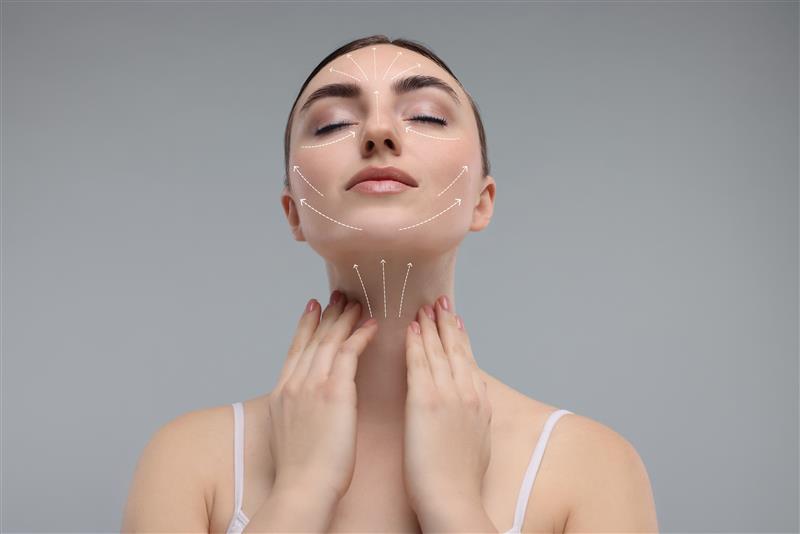
Submental fullness—commonly described as a “double chin”—is one of the most resistant aesthetic concerns. It sits at the intersection of fat distribution, skin quality, and underlying structure, which is precisely why quick fixes so often fall short.
For some, it appears early despite otherwise lean features. For others, it develops gradually with age, as tissue descends and definition softens. In both cases, the solution is rarely singular.
This guide takes a measured look at what actually works, and where expectations need to be grounded.
Understanding Submental Fullness
A double chin is not a single issue. It is typically driven by one or more of the following:
- Excess submental fat
- Skin laxity
- Muscle banding (platysma)
- Skeletal structure (chin projection, jawline definition)
The distinction matters. Treating fat when the issue is skin—or tightening skin when structure is lacking—leads to underwhelming results.
A precise diagnosis is the starting point of any meaningful correction.
Non-Surgical Approaches: Where They Fit
Non-surgical treatments are often the first consideration, though their role is limited.
Fat-Dissolving Injections
Kybella works by breaking down fat cells over a series of treatments.
What it offers:
- Gradual reduction in small fat deposits
- No incisions or surgical downtime
Where it falls short:
- Multiple sessions required
- Swelling can be significant and prolonged
- Limited effect in moderate to severe cases
It is best suited to mild, well-defined pockets of fat in patients with good skin elasticity.
Energy-Based Skin Tightening
Technologies using ultrasound or radiofrequency aim to improve skin firmness.
They may:
- Provide subtle tightening
- Enhance skin quality modestly
They do not:
- Remove fat effectively
- Redefine the jawline in a structural way
These treatments are often adjunctive rather than definitive.
Surgical Approaches: Where Real Change Happens
When submental fullness is more pronounced, surgical intervention becomes the more reliable path.
Chin Liposuction
Chin liposuction remains one of the most effective and efficient procedures in this category.
It involves:
- Precise removal of submental fat
- Small, discreet access points
- Minimal disruption to surrounding structures
A well-executed result:
- Sharpens the jawline
- Restores separation between chin and neck
- Appears natural and proportionate
Recovery is relatively straightforward, with most patients returning to normal routines within a few weeks.
However, liposuction alone assumes adequate skin elasticity. Without it, removal of fat may reveal or exaggerate laxity.
Neck Lift (Lower Face and Neck Rejuvenation)
When skin laxity and muscle banding are present, a neck lift becomes the more appropriate solution.
This approach addresses:
- Loose or redundant skin
- Platysmal banding
- Deeper structural positioning
Often performed alongside a facelift, it creates:
- A more defined cervicomental angle
- Continuity between the jawline and neck
This is a more involved procedure, but also the one capable of producing the most refined and lasting correction in advanced cases.
Structural Considerations: The Overlooked Factor
In some patients, the issue is not excess tissue—but insufficient projection.
A recessed chin can:
- Reduce jawline definition
- Create the appearance of fullness beneath the chin
In these cases, chin augmentation (surgical or filler-based) may be part of a more balanced solution.
Treating the area in isolation, without addressing structure, often leads to incomplete outcomes.
Choosing the Right Approach
The most effective treatment plan is not based on preference—it is based on anatomy.
A simplified framework:
- Mild fat, good skin → non-surgical options may be appropriate
- Moderate fat, firm skin → chin liposuction
- Fat + skin laxity + muscle changes → neck lift or combined approach
- Structural deficiency → consider chin projection alongside other treatments
Over-treatment and under-treatment are equally common. Precision matters more than intervention.
Recovery Considerations
Recovery varies depending on the approach.
Non-surgical treatments:
- Swelling over several days to weeks
- Gradual, incremental improvement
Chin liposuction:
- Swelling and mild bruising for one to two weeks
- Compression garments often required
- Visible refinement within a few weeks, with continued improvement over months
Neck lift:
- Longer recovery period
- More pronounced initial swelling
- Final results developing over several months
In all cases, early appearance does not reflect the final outcome. Subtle refinement continues well beyond the initial healing phase.
What Defines a Good Result
A successful outcome is not simply a reduction in fullness.
It should:
- Create a clean, natural transition between face and neck
- Restore definition without sharpness or tension
- Remain consistent with the patient’s overall facial structure
The goal is not to remove volume indiscriminately, but to restore proportion and balance.
On Cost and Value
Costs vary widely depending on:
- Treatment type
- Surgeon expertise
- Geographic location
Non-surgical treatments may appear more accessible initially, but often require repeated sessions.
Surgical approaches involve a higher upfront investment, though typically offer greater efficiency and longevity.
As with most aesthetic procedures, cost should be considered alongside consistency of outcomes—not in isolation.
Final Perspective
Submental contouring is often approached too simply. In reality, it requires a nuanced understanding of fat, skin, muscle, and structure.
When these elements are assessed correctly—and addressed with restraint—the result is not dramatic change, but quiet refinement.
The difference is subtle, but significant:
a profile that appears more defined, more balanced, and more in alignment with the rest of the face.