In contemporary facial rejuvenation, the distinction between a good result and an exceptional one is rarely defined by the decision to undergo surgery—but rather by how that surgery is performed.
Among the most widely discussed techniques are the deep plane facelift and the SMAS facelift. Both are grounded in sound anatomical principles, yet they differ in execution, philosophy, and ultimately, outcome.
For patients seeking natural, enduring results, understanding this distinction is essential.
Understanding the Structural Approach to Facelifting
Modern facelift surgery is no longer centred on tightening the skin alone. Instead, it focuses on repositioning the deeper structural layers of the face.
At the core of both techniques lies the Superficial Musculoaponeurotic System (SMAS)—a layer of tissue that connects facial muscles and plays a key role in expression and ageing.
The difference between these techniques lies in how this layer is approached and repositioned.
What Is a SMAS Facelift?
The SMAS facelift is one of the most established and widely performed techniques in aesthetic surgery.
In this approach:
- The skin is separated from the underlying tissue
- The SMAS layer is then lifted, tightened, or repositioned
- Excess skin is redraped to create a smoother contour
Advantages
- Proven, reliable results
- Effective for moderate facial ageing
- Widely practised by experienced surgeons
Considerations
While the SMAS facelift produces natural-looking improvements, the separation of skin from deeper structures can sometimes limit the degree of mid-face lifting and longevity when compared to more advanced techniques.
What Is a Deep Plane Facelift?
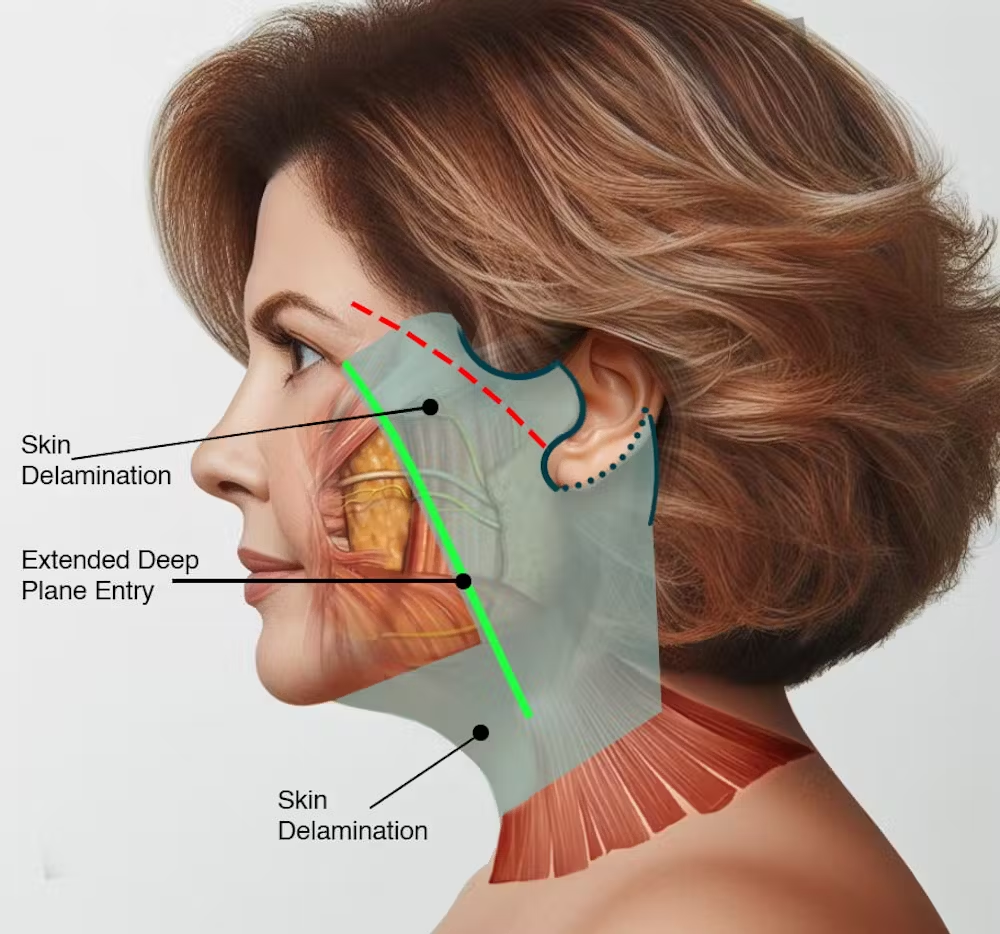
The deep plane facelift represents a more advanced evolution of facelift surgery.
Rather than separating the skin and SMAS, this technique:
- Lifts the skin and underlying structures as a single unit
- Releases key facial ligaments
- Repositions deeper tissues with less tension on the skin
Advantages
- More comprehensive mid-face rejuvenation
- Greater lift in the cheeks and nasolabial area
- Results that move more naturally with facial expression
- Often longer-lasting outcomes
Considerations
The deep plane technique is:
- Technically more complex
- Performed by a smaller number of highly specialised surgeons
Its success depends heavily on surgical expertise.
Key Differences Between Deep Plane and SMAS Facelift
Approach
- SMAS: Skin and deeper layers treated separately
- Deep Plane: Skin and deeper tissues lifted together
Natural Appearance
- SMAS: Natural, though occasionally more surface-level
- Deep Plane: Often more seamless and anatomically integrated
Mid-Face Rejuvenation
- SMAS: Moderate improvement
- Deep Plane: Superior lifting of the cheeks and nasolabial folds
Longevity
- SMAS: Typically 8–12 years
- Deep Plane: Often longer-lasting due to deeper repositioning
Complexity
- SMAS: Widely practised
- Deep Plane: Requires advanced surgical expertise
Which Technique Looks More Natural?
When performed at a high level, both techniques can produce refined, natural results.
However, the deep plane facelift is often associated with:
- Less tension on the skin
- More natural movement
- A softer, less “operated” appearance
This is largely due to the way deeper structures are repositioned rather than simply tightened.
That said, technique alone does not guarantee outcome.
The Role of the Surgeon
The most important variable is not the technique—it is the surgeon performing it.
A well-executed SMAS facelift can outperform a poorly executed deep plane procedure.
Surgeons with a deep understanding of facial anatomy and a conservative aesthetic—such as Steven Pearlman—prioritise harmony, proportion, and subtlety over dramatic change.
In practice, the distinction between techniques becomes secondary to skill, judgement, and consistency.
Which Technique Is Right for You?
The choice between deep plane and SMAS facelift depends on:
- Degree of facial ageing
- Desired outcome
- Skin quality and anatomy
- Surgeon recommendation
Patients with more advanced mid-face ageing may benefit from the deeper structural lift of the deep plane technique, while others may achieve excellent results with a SMAS approach.
A thorough consultation remains essential.
Final Thoughts
The conversation around deep plane versus SMAS facelift is not about identifying a universally “better” technique—it is about understanding which approach is most appropriate for the individual.
Both techniques, when performed with precision and restraint, can deliver exceptional outcomes.
Ultimately, the most natural result is achieved not through technique alone, but through a combination of:
- Surgical expertise
- Anatomical understanding
- A refined aesthetic sensibility
In the hands of the right surgeon, the goal is never to create a different face—only a more balanced and restored version of the one that already exists.