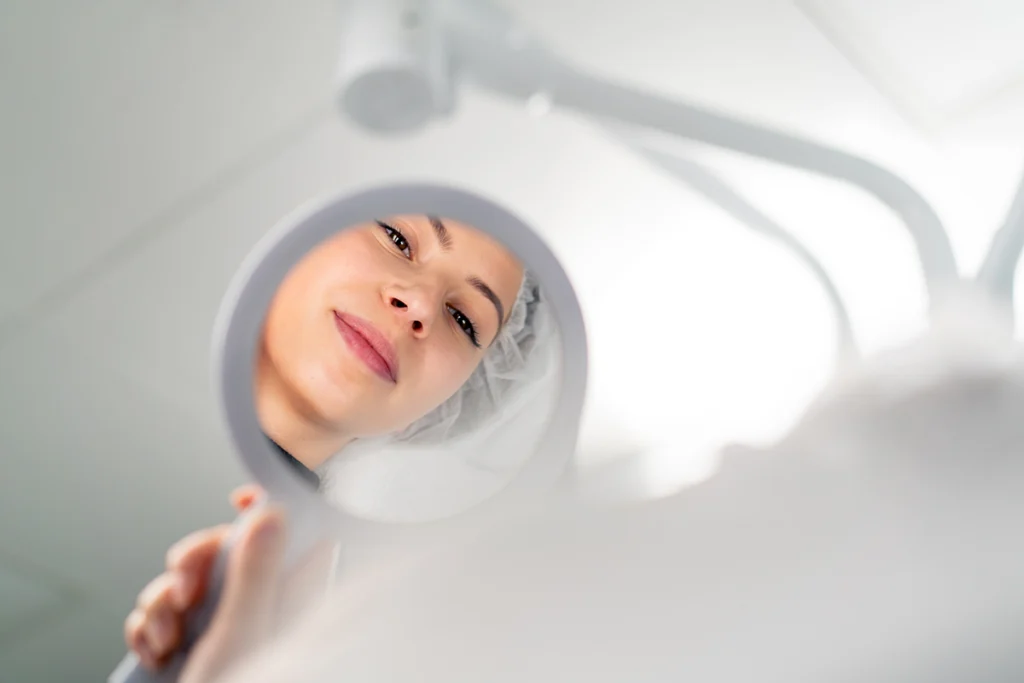
Rhinoplasty is as much a process of healing as it is a surgical procedure. While the technical precision of the operation defines the structural outcome, it is the recovery period that ultimately reveals the final result.
For patients considering rhinoplasty—particularly those seeking refined, natural outcomes—the recovery timeline is often one of the most important, yet misunderstood, aspects of the journey.
Understanding what to expect at each stage not only reduces anxiety, but allows for better planning, improved healing, and more realistic expectations.
The First 24 Hours: Immediate Post-Surgery Phase
The first day following rhinoplasty is typically the most intensive in terms of management, though not necessarily the most uncomfortable.
Patients can expect:
- Nasal congestion and a feeling of pressure
- Mild to moderate swelling
- Light bleeding or drainage
- A splint applied to protect the nose
Contrary to common assumptions, severe pain is uncommon. Most patients describe the sensation as pressure rather than sharp discomfort.
During this phase, rest is essential. Keeping the head elevated and avoiding unnecessary movement helps minimize swelling and bleeding.
Days 2–3: Peak Swelling and Bruising
Swelling and bruising typically peak within the first 72 hours.
This is when patients may notice:
- Puffiness around the nose and eyes
- Bruising under the eyes (often referred to as “black eyes”)
- Increased facial tightness
While this stage can appear dramatic, it is entirely temporary and a normal part of the healing process.
Top surgeons often emphasize that this phase is short-lived but visually the most noticeable.
Days 4–7: Visible Improvement Begins
By the end of the first week:
- Bruising begins to fade
- Swelling starts to reduce
- Patients feel significantly more comfortable
Most importantly, this is when:
- The nasal splint is removed
- Early results begin to take shape
At this stage, patients often get their first glimpse of their new profile—though it is important to remember that the nose is still far from its final form.
Week 2: Returning to Normal Life
By the second week, many patients feel ready to return to their daily routines.
Typical progress includes:
- Significant reduction in bruising
- Noticeably decreased swelling
- Ability to resume work and social activities
For those concerned about visibility, any remaining bruising can usually be concealed with makeup.
From a social standpoint, most patients feel comfortable being seen in public without drawing attention.
Weeks 3–4: Subtle Refinement Phase
During this period:
- Residual swelling continues to decrease
- The nasal shape becomes more defined
- Breathing typically improves
However, it is common for:
- The nasal tip to remain slightly swollen
- Minor asymmetries to appear temporarily
This is a normal part of healing and not indicative of the final result.
Months 1–3: Early Results Take Shape
At the one to three-month mark:
- The majority of swelling has resolved
- The nasal bridge appears more refined
- Structural changes become more apparent
Patients often feel that their nose already looks significantly improved—but experienced surgeons will emphasize that final refinement is still ongoing.
The tip of the nose, in particular, retains swelling longer than other areas.
Months 3–6: Continued Definition
This stage is where results begin to look more polished.
Changes include:
- Increased definition of the nasal tip
- Improved contour and symmetry
- More natural integration with facial features
By this point, most patients feel confident in their appearance, even though subtle healing continues beneath the surface.
Months 6–12: Final Results Emerge
Rhinoplasty is not an overnight transformation—it is a gradual refinement.
Between six months and one year:
- Final swelling resolves
- Skin contracts fully over the new structure
- The nasal tip sharpens and settles
For complex cases, particularly those involving significant reshaping or thicker skin, final results may take closer to 12–18 months.
Factors That Influence Recovery Time
Not all rhinoplasty recoveries are identical. Several variables can affect healing speed and outcome:
Surgical Technique
More complex procedures—particularly those involving structural grafting—may require longer healing.
Skin Thickness
Patients with thicker skin often experience prolonged swelling, especially in the nasal tip.
Individual Healing Response
Genetics, overall health, and adherence to post-operative care all play a role.
Primary vs Revision Surgery
Revision rhinoplasty typically involves a longer and more unpredictable recovery process.
Managing Swelling: What Actually Helps
Swelling is the defining feature of rhinoplasty recovery.
To optimize healing:
- Keep the head elevated, especially during sleep
- Avoid strenuous activity for several weeks
- Limit sodium intake to reduce fluid retention
- Follow all post-operative instructions carefully
In some cases, surgeons may recommend:
- Taping the nose
- Steroid injections for persistent swelling
When Can You Exercise Again?
Returning to physical activity should be gradual:
- Light walking: within the first week
- Moderate exercise: after 3–4 weeks
- Full activity: typically after 6 weeks
Contact sports or any activity that risks nasal impact should be avoided for a longer period.
When Will You See the Final Result?
This is the most important question—and the one patients often underestimate.
While early improvements are visible within weeks, true rhinoplasty results take time.
- 70–80% of the result: visible within 2–3 months
- 90% of the result: visible by 6 months
- Final refinement: 12+ months
Patience is not optional—it is part of the process.
The Psychological Side of Recovery
One of the less discussed aspects of rhinoplasty recovery is the emotional journey.
It is common for patients to experience:
- Temporary doubt during early swelling
- Heightened focus on minor imperfections
- Fluctuating perceptions of results
This is entirely normal.
Experienced surgeons prepare patients for this phase, emphasizing that early appearances do not reflect the final outcome.
The Surgical Collective Perspective
At the highest level of cosmetic surgery, recovery is not treated as an afterthought—it is an integral part of the overall experience.
Leading surgeons provide:
- Detailed aftercare protocols
- Close follow-up and monitoring
- Personalized guidance throughout healing
Because a technically successful surgery can only be fully realized through proper recovery and patient understanding.
Final Thoughts
Rhinoplasty recovery is a gradual, layered process that unfolds over months—not days.
While the initial transformation happens in the operating room, the final result is revealed slowly, as swelling subsides and the nose refines into its new structure.
For patients seeking exceptional outcomes, the key is simple:
- Choose the right surgeon
- Follow post-operative guidance
- Allow time to do its work
Because in rhinoplasty, patience is not just important—it is essential.