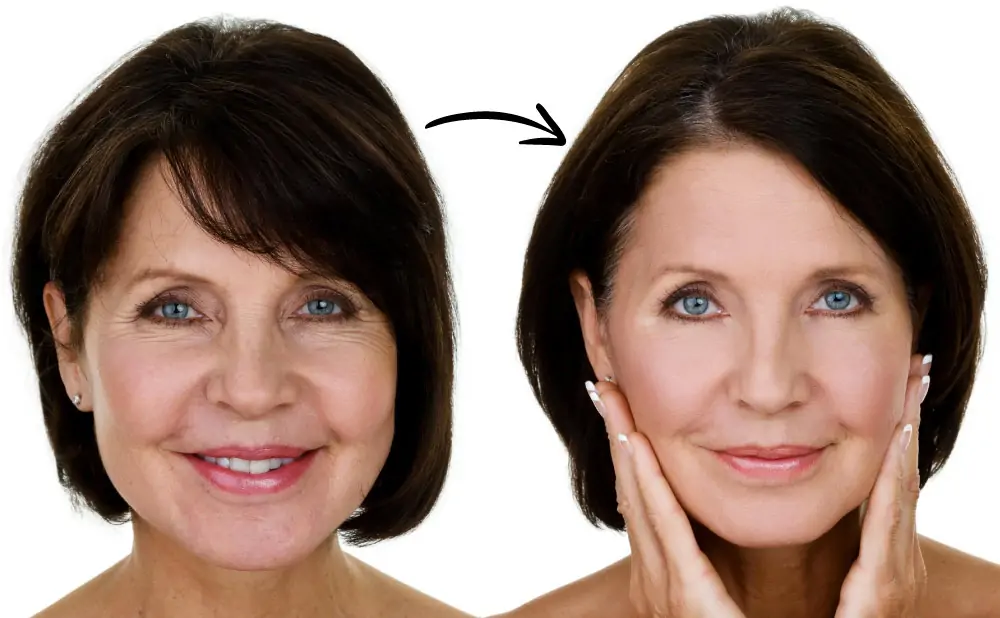
In modern facial aesthetics, the distinction between a mini facelift and a full facelift is often oversimplified—reduced to marketing language rather than surgical reality.
Patients are frequently told a mini facelift is the “less invasive” option, while a full facelift is framed as more “dramatic.” In truth, the decision is far more strategic. Choosing the wrong procedure doesn’t just affect your results—it can limit them.
At the highest level of surgical practice, the question is not which is better, but which is appropriate for your anatomy, ageing pattern, and long-term goals.
What Is a Mini Facelift?
A mini facelift—sometimes referred to as a “short-scar facelift”—is a more targeted procedure focused on the lower face.
It typically addresses:
- Early jowl formation
- Mild skin laxity
- Subtle loss of jawline definition
The incisions are shorter, and the dissection is more limited compared to a full facelift. However, this does not mean it is a “quick fix” or a non-serious procedure—it still requires surgical precision.
Who It’s Best For
A mini facelift is most suitable for patients who:
- Are in their early to mid-40s (sometimes early 50s)
- Show early signs of sagging, not advanced ageing
- Want subtle refinement rather than major correction
When used correctly, it delivers highly natural results with minimal disruption.
Where It Falls Short
This is where many patients are misled.
A mini facelift does not effectively address:
- Significant neck laxity
- Deep structural sagging
- Advanced volume descent
If used beyond its limits, results can appear underwhelming—or fade quickly.
What Is a Full Facelift?
A full facelift—often involving SMAS or deep-plane techniques—is a comprehensive procedure that addresses both the face and neck at a structural level.
It targets:
- Deep tissue descent
- Pronounced jowls
- Neck sagging and banding
- Midface ageing
Rather than simply tightening skin, a full facelift repositions underlying structures—this is what creates durable, natural-looking outcomes.
Who It’s Best For
A full facelift is typically recommended for patients who:
- Are in their mid-50s to 60s (though not exclusively)
- Have visible, structural ageing
- Want a longer-lasting, more complete result
When performed by an elite surgeon, the outcome should never look “tight”—only refreshed and structurally restored.
The Trade-Off
A full facelift involves:
- Longer recovery
- More extensive surgery
- Higher cost
But in the right patient, it avoids the need for repeated, less effective procedures.
The Real Difference: Surface vs Structure
The key distinction is not size—it’s depth and longevity.
- A mini facelift works closer to the surface and is ideal for early intervention
- A full facelift works at a deeper structural level, delivering more comprehensive correction
Patients who choose a mini facelift when they actually need a full facelift often end up undergoing revision surgery sooner than expected.
Why “Less Invasive” Can Be Misleading
There’s a tendency to equate less invasive with better. That logic breaks down quickly in facial surgery.
A mini facelift:
- Is not risk-free
- Does not stop ageing
- May not provide sufficient correction
In some cases, it becomes a short-term solution that leads to higher long-term cost—both financially and surgically.
The better question is not “How small can I go?” but “What will actually solve the problem properly?”
Can You Start with a Mini Facelift?
Yes—but only if your anatomy supports it.
In well-selected patients, a mini facelift can:
- Delay the need for a full facelift
- Maintain a youthful structure over time
- Deliver subtle, refined improvement
But this requires restraint and honest assessment. A surgeon who recommends a mini facelift for everyone is not exercising judgement—they’re selling simplicity.
How to Know Which One You Need
You likely need a mini facelift if:
- Your concerns are mild and mostly limited to the jawline
- Your neck still has good definition
- Skin elasticity remains relatively strong
You likely need a full facelift if:
- You have visible sagging in both face and neck
- Jowls are well-developed
- Non-surgical treatments are no longer effective
- You want a result that lasts significantly longer
The Most Important Factor: Surgical Judgement
Technique matters—but judgement matters more.
The best surgeons are not defined by offering the latest trend, but by knowing:
- When to operate
- How much to do
- And when to say no
Over-treatment leads to unnatural results. Under-treatment leads to disappointment. Precision sits in the middle.
Final Thought: Choose the Right Procedure, Not the Easier One
A mini facelift is not a “better” version of a full facelift. It is simply a different tool—one that works exceptionally well when used appropriately, and poorly when misapplied.
The goal is not to undergo the least invasive procedure.
The goal is to undergo the right procedure, at the right time, for the right reasons.