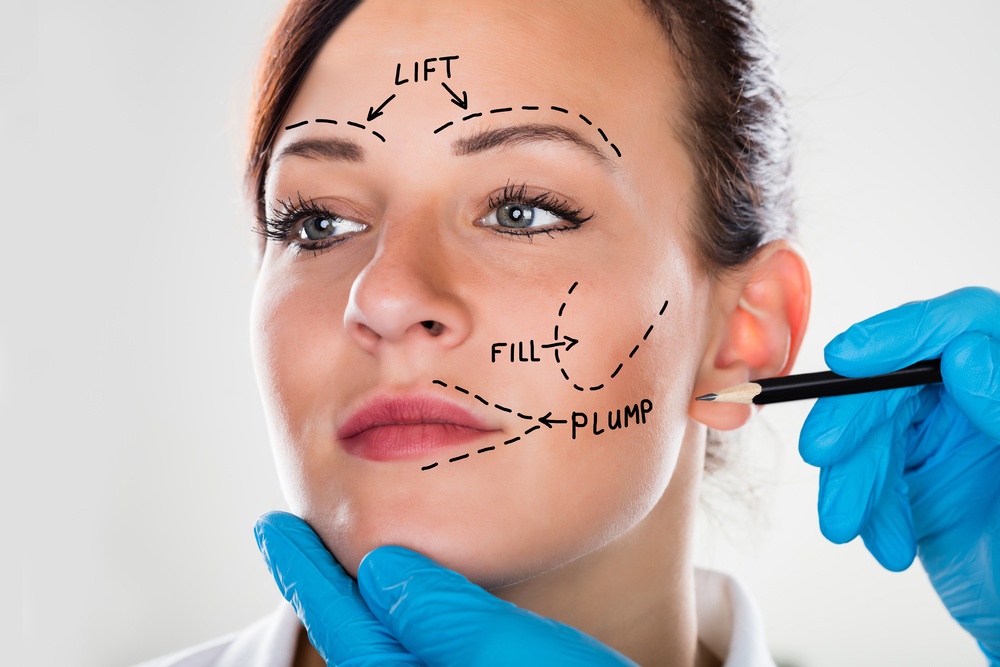
Facelift surgery sits at the top of aesthetic procedures for a reason: when it’s done well, nothing else delivers the same level of structural, long-lasting rejuvenation. But it’s also one of the most misunderstood operations in modern cosmetic medicine.
This guide cuts through the noise — no trends, no filler advice — just a clear, clinical breakdown of what actually matters if you’re considering a facelift.
What a Facelift Actually Does (and Doesn’t Do)
A facelift — medically called a rhytidectomy — is not about “pulling skin tight.” That outdated approach is exactly what creates the artificial, overdone look people fear.
A modern facelift:
- Repositions deep facial structures (SMAS layer)
- Restores lost volume positioning
- Refines the jawline and neck
- Removes excess, redundant skin (without tension)
What it does not do:
- It does not improve skin quality (that’s where lasers, peels, etc. come in)
- It does not stop ageing — it resets the clock
Why People Consider a Facelift
Most patients don’t wake up wanting surgery. They reach a point where:
- Fillers no longer look natural
- The jawline starts to blur
- The neck shows visible laxity
- The face looks tired, even when rested
This is the tipping point where non-surgical treatments stop being effective — and surgical correction becomes the logical next step.
Types of Facelift Techniques (What Actually Matters)
There are many names in the market, but most techniques fall into a few real categories.
SMAS Facelift
This is the standard modern approach.
- Targets the SMAS layer (the structural layer beneath the skin)
- Provides natural, durable results
- Less aggressive than deeper techniques
Deep Plane Facelift
This is considered by many top surgeons to be the most advanced technique.
- Releases and repositions deeper facial ligaments
- Creates a more natural, tension-free result
- Particularly effective for midface and nasolabial folds
Surgeons like Rian Maercks are known for pushing this approach further in terms of facial harmony and structure.
Mini Facelift
A limited version of a facelift.
- Smaller incisions
- Shorter recovery
- More subtle results
Best suited for early ageing — not a replacement for a full facelift.
Facelift vs Non-Surgical Treatments
This is where a lot of people waste time and money.
Non-surgical options include:
- Botox
- Dermal Fillers
- Skin tightening technologies
These can:
- Improve fine lines
- Add temporary volume
- Slightly enhance contours
But they cannot reposition tissue.
The honest comparison:
| Factor | Non-Surgical | Facelift |
|---|---|---|
| Longevity | Months | 8–15 years |
| Structural change | ❌ | ✅ |
| Cost over time | High (repeat treatments) | One-time investment |
| Natural result (long-term) | Often declines | Improves with proper technique |
Who Is a Good Candidate?
A facelift isn’t about age — it’s about anatomy.
You’re likely a good candidate if you have:
- Sagging along the jawline
- Deep nasolabial folds
- Neck laxity or banding
- Loss of facial definition
Most patients fall into the 40–65 range, but younger and older cases are common depending on genetics and lifestyle.
The Procedure: What Actually Happens
- Performed under general anaesthesia or deep sedation
- Incisions placed around the ears (strategically hidden)
- Underlying tissues repositioned
- Excess skin removed conservatively
Surgery typically takes:
- 3–6 hours, depending on complexity
Often combined with:
- Neck lift
- Fat grafting
- Eyelid surgery (blepharoplasty)
Recovery Timeline (Realistic Expectations)
This is where expectations need to be grounded.
Week 1–2:
- Swelling and bruising
- Limited social activity
Week 3–4:
- Noticeable improvement
- Presentable in most settings
2–3 months:
- Majority of swelling resolved
6–12 months:
- Final, refined result
The biggest mistake people make is expecting to “bounce back” in a week. That’s not how surgical healing works.
Results: What You Can Expect
A well-executed facelift should:
- Look undetectable
- Restore a more youthful version of you — not a different face
- Improve harmony between face and neck
Top surgeons focus on:
- Natural tension-free results
- Avoiding the “pulled” look
- Preserving identity
How Long Does a Facelift Last?
Most facelifts last:
- 8–15 years
But ageing continues — so think of it as:
Turning the clock back, not stopping it.
Longevity depends on:
- Surgical technique
- Skin quality
- Lifestyle (sun exposure, smoking, etc.)
Risks and Complications
Like any surgery, there are risks:
- Swelling and bruising (expected)
- Nerve injury (rare but important)
- Hematoma (most common complication)
- Scarring (usually minimal when done well)
This is why surgeon selection matters more than anything else.
Choosing the Right Surgeon
This is where outcomes are made or broken.
Look for:
- Specialisation in facial surgery
- Consistent, natural results
- Depth of experience (not just years, but case volume)
Surgeons like Deepak Dugar and Steven Pearlman are often noted for refined, natural facial outcomes — but the key is matching the surgeon to your specific anatomy and goals.
Cost: What You’re Really Paying For
A facelift is not a commodity.
Typical range:
- $15,000 – $50,000+ (top-tier markets like Beverly Hills or NYC)
What affects price:
- Surgeon expertise
- Technique complexity
- Facility and anaesthesia
- Geographic location
Cheap surgery is rarely a smart decision in this category.
The Biggest Misconceptions
Let’s clear these up:
“Facelifts look fake”
→ Bad facelifts look fake. Good ones are invisible.
“I can achieve the same with fillers”
→ You can’t. Different mechanism entirely.
“I’m too young / too old”
→ Timing is about anatomy, not age.
Final Thoughts
A facelift remains the gold standard for meaningful facial rejuvenation — but only when approached correctly.
The difference isn’t just surgery vs non-surgery.
It’s:
Average work vs elite surgical execution.
If you treat this as a serious, considered decision — with the right surgeon, the right technique, and realistic expectations — the outcome can be transformative in a way no non-surgical treatment can replicate.