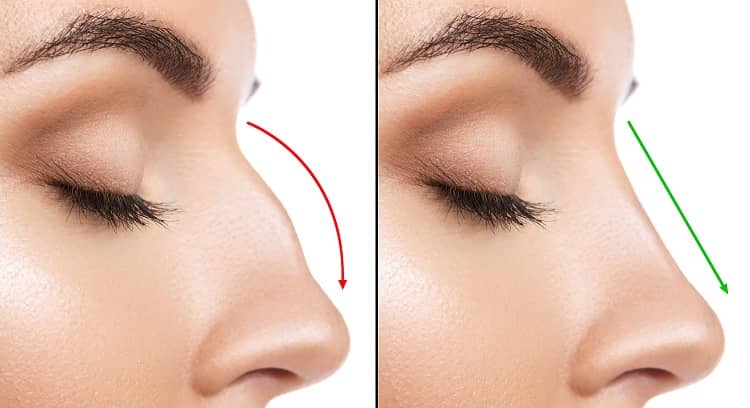
Rhinoplasty is one of the most nuanced and technically demanding procedures in modern plastic surgery. While often perceived as a purely aesthetic intervention, the reality is far more complex. At its highest level, rhinoplasty exists at the intersection of function and form—where breathing, structure, and appearance must be balanced with precision.
For discerning patients, understanding the distinction between structural rhinoplasty and cosmetic rhinoplasty is essential. Not all procedures are created equal, and not all surgeons approach the nose with the same philosophy.
This guide explores the critical differences, surgical approaches, and decision-making considerations that separate functional correction from aesthetic refinement.
What Is Cosmetic Rhinoplasty?
Cosmetic rhinoplasty focuses primarily on the external appearance of the nose. The goal is to enhance facial harmony by refining proportions, symmetry, and contour.
Common concerns addressed include:
- Dorsal humps (bumps on the bridge)
- Nasal width
- Tip definition or projection
- Asymmetry
- Profile refinement
While cosmetic rhinoplasty can dramatically improve facial balance, it is not inherently concerned with internal nasal function—unless the surgeon deliberately incorporates functional considerations.
The Risk of a Purely Cosmetic Approach
Less experienced or aesthetically focused surgeons may prioritize visual outcomes without fully considering the underlying nasal structure. This can lead to:
- Compromised breathing
- Structural instability over time
- Collapse of the nasal valves
- Need for revision surgery
This is where the distinction between cosmetic and structural approaches becomes critical.
What Is Structural Rhinoplasty?
Structural rhinoplasty is a more advanced and comprehensive approach that prioritizes long-term stability and nasal function alongside aesthetics.
Rather than simply removing or reshaping tissue, structural rhinoplasty involves:
- Reinforcing the nasal framework
- Preserving key support structures
- Using grafts to maintain airway integrity
- Designing changes that age naturally over time
Key Principles of Structural Rhinoplasty
- Support Over Reduction
Instead of aggressively removing cartilage or bone, structural techniques focus on maintaining strength. - Function Is Non-Negotiable
Breathing and airflow are considered fundamental, not secondary. - Longevity of Results
The nose is built to withstand time, healing, and natural tissue changes. - Precision Grafting
Cartilage grafts (often from the septum or ear) are used to support and shape the nose.
Why This Distinction Matters
At a surface level, both approaches may produce visually appealing results. However, the long-term outcomes can differ significantly.
Cosmetic Rhinoplasty Alone May Lead To:
- Short-term aesthetic improvement
- Higher risk of structural weakness
- Potential breathing issues
- Greater likelihood of revision
Structural Rhinoplasty Offers:
- Stable, predictable results
- Preservation or improvement of breathing
- Reduced risk of collapse or deformity
- More natural long-term ageing
For a platform like The Surgical Collective, this distinction is essential. The goal is not just transformation—but refined, sustainable outcomes performed by surgeons who understand the architecture of the nose at a deeper level.
When Is Cosmetic Rhinoplasty Appropriate?
Cosmetic rhinoplasty may be suitable when:
- The patient has no breathing issues
- Structural integrity is already strong
- Changes are minor and surface-level
- The surgeon incorporates preservation techniques
However, even in these cases, the best surgeons still apply structural principles. Purely reductive approaches are increasingly viewed as outdated.
When Is Structural Rhinoplasty Necessary?
Structural rhinoplasty is often the preferred approach when:
- There are existing breathing difficulties
- The nose has weak cartilage support
- Significant reshaping is required
- The patient has had previous nasal surgery (revision cases)
- Long-term stability is a priority
In reality, most modern high-level rhinoplasty incorporates structural techniques to some degree.
The Role of Functional Rhinoplasty
Functional rhinoplasty is closely related to structural rhinoplasty but focuses specifically on correcting airway obstruction.
This may involve:
- Septoplasty (correcting a deviated septum)
- Turbinate reduction
- Nasal valve repair
In many cases, functional and structural rhinoplasty are performed together, ensuring that both breathing and aesthetics are addressed simultaneously.
Surgical Techniques: Structural vs Cosmetic
Cosmetic Techniques May Include:
- Dorsal hump reduction
- Tip reshaping
- Bone narrowing (osteotomies)
Structural Techniques Include:
- Spreader grafts to widen airflow
- Columellar struts for tip support
- Alar batten grafts to prevent collapse
- Septal reconstruction
The difference lies not just in what is done—but how and why it is done.
Open vs Closed Approach
Both structural and cosmetic rhinoplasty can be performed using:
- Open rhinoplasty: External incision for full visibility
- Closed rhinoplasty: Internal incisions with no external scar
Structural cases more commonly require an open approach due to the complexity involved.
Choosing the Right Surgeon
This is where most patients make critical mistakes.
A surgeon who excels in cosmetic refinement is not necessarily skilled in structural reconstruction. For a procedure as complex as rhinoplasty, you should be looking for:
- Deep understanding of nasal anatomy
- Experience with functional and revision cases
- Evidence of long-term results (not just early outcomes)
- Conservative, balanced aesthetic judgment
Red Flags to Avoid
- Overly aggressive “before and after” transformations
- One-style-fits-all noses
- Lack of discussion around breathing or structure
- Minimal mention of grafting or support techniques
Recovery and Long-Term Outcomes
Recovery varies depending on the complexity of the procedure.
Cosmetic Rhinoplasty Recovery
- Swelling: 2–4 weeks (visible), months (residual)
- Return to normal activities: 1–2 weeks
Structural Rhinoplasty Recovery
- Slightly longer due to grafting and reconstruction
- Swelling may persist longer, particularly in the tip
- Results evolve more gradually but tend to be more stable
Final Thoughts: Form Should Never Compromise Function
The most sophisticated rhinoplasty outcomes are those where the surgery is invisible—where the nose looks natural, functions effortlessly, and integrates seamlessly with the face.
This is rarely achieved through purely cosmetic adjustments alone.
Structural rhinoplasty represents a shift in surgical philosophy: from reduction to preservation, from appearance to integrity, and from short-term results to long-term excellence.
For patients seeking a truly refined outcome, the question is not whether the nose looks better immediately after surgery—but whether it will continue to look and function well for years to come.